

To create, deactivate, and limit developer keys programmatically instead, use the Admin API.
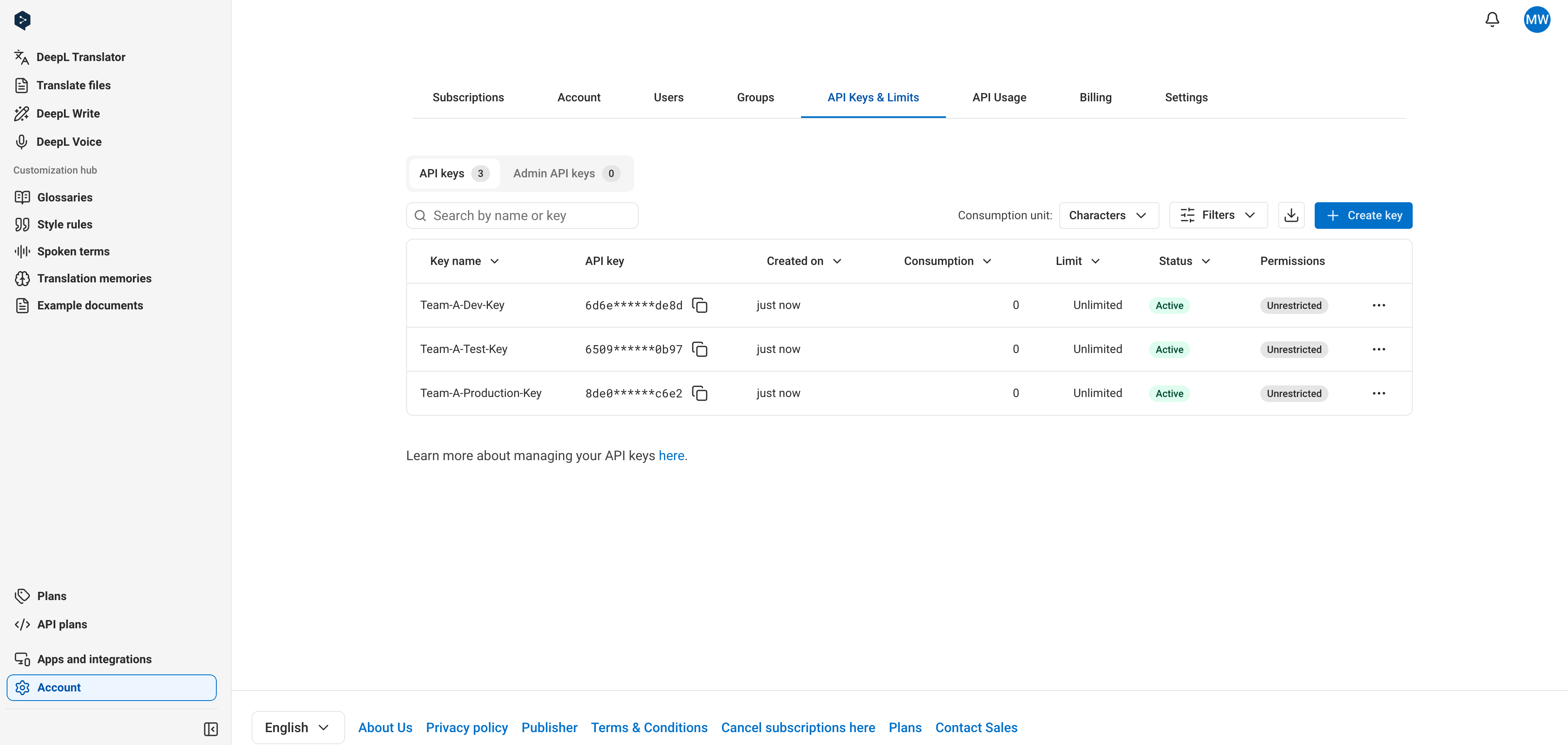
The API Keys & Limits tab
Filter API keys
You can filter API keys by dimensions such as key status, key-level permissions, and consumption. Use this to quickly narrow the key table down to, for example, only active keys or only keys nearing their usage limit.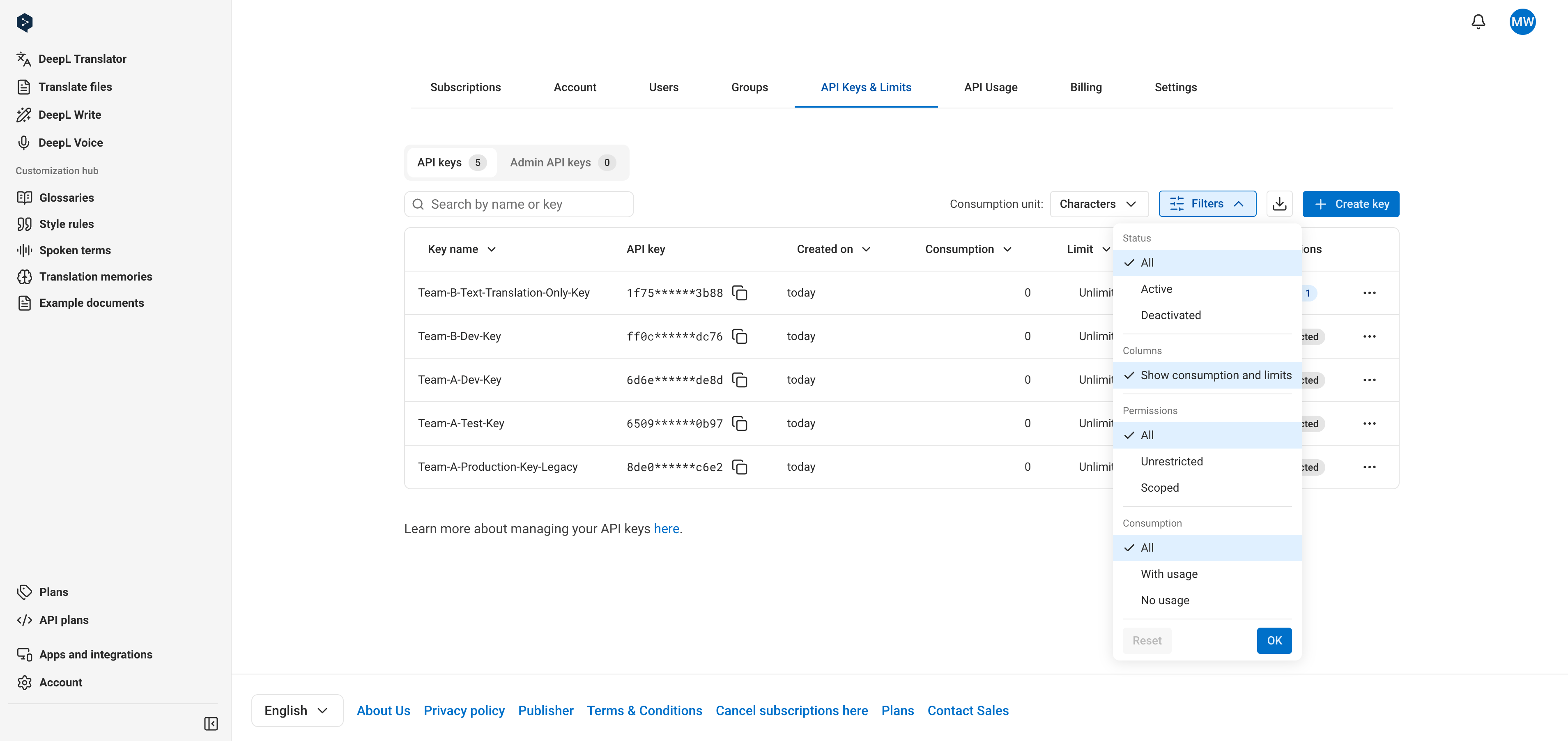
Filtering the API key table
Create a key
Click “Create key”. You can optionally name the key during creation; if you don’t, it’s named “DeepL API Key” automatically. Naming keys lets you find them later using the search bar on the “API keys” tab.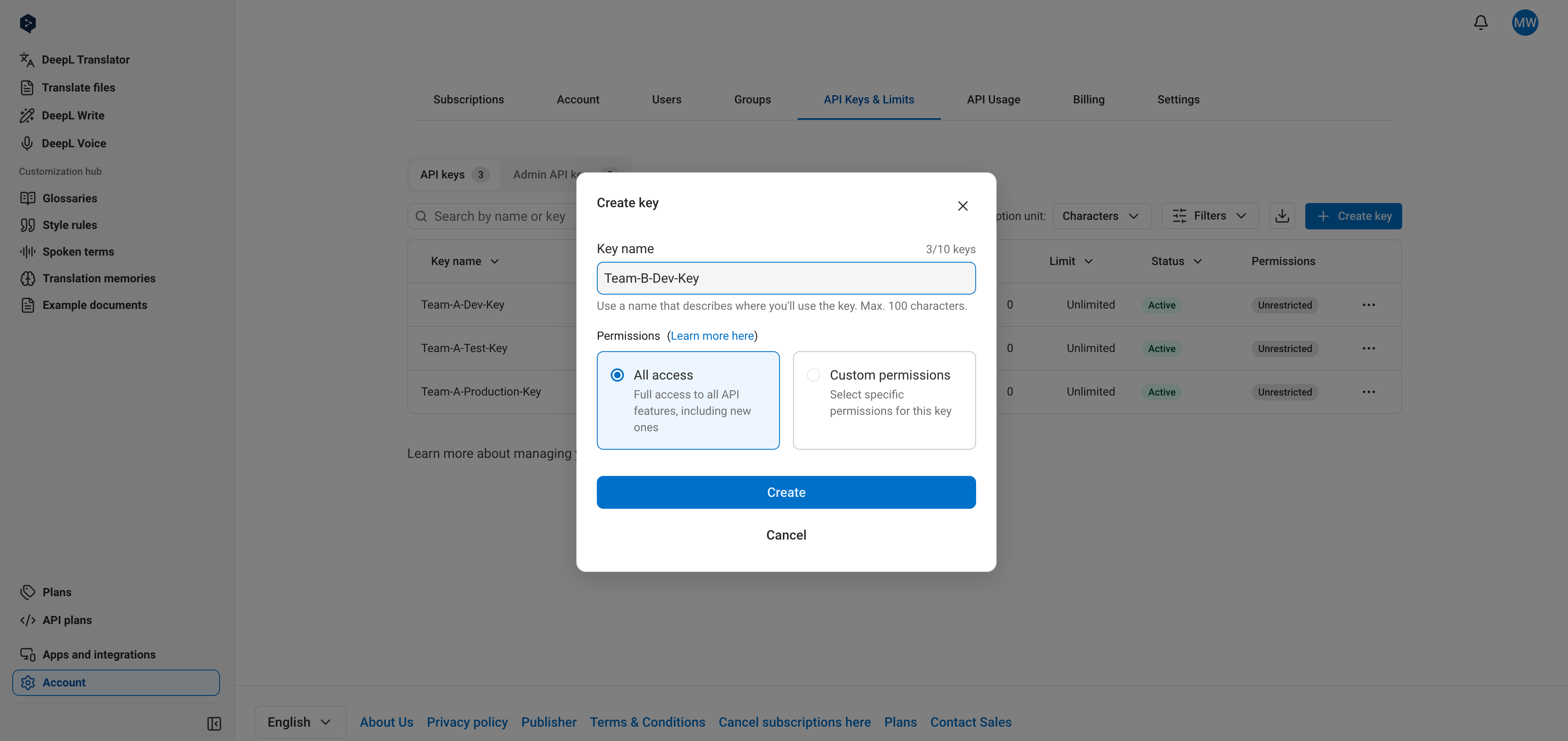
Create a new API key
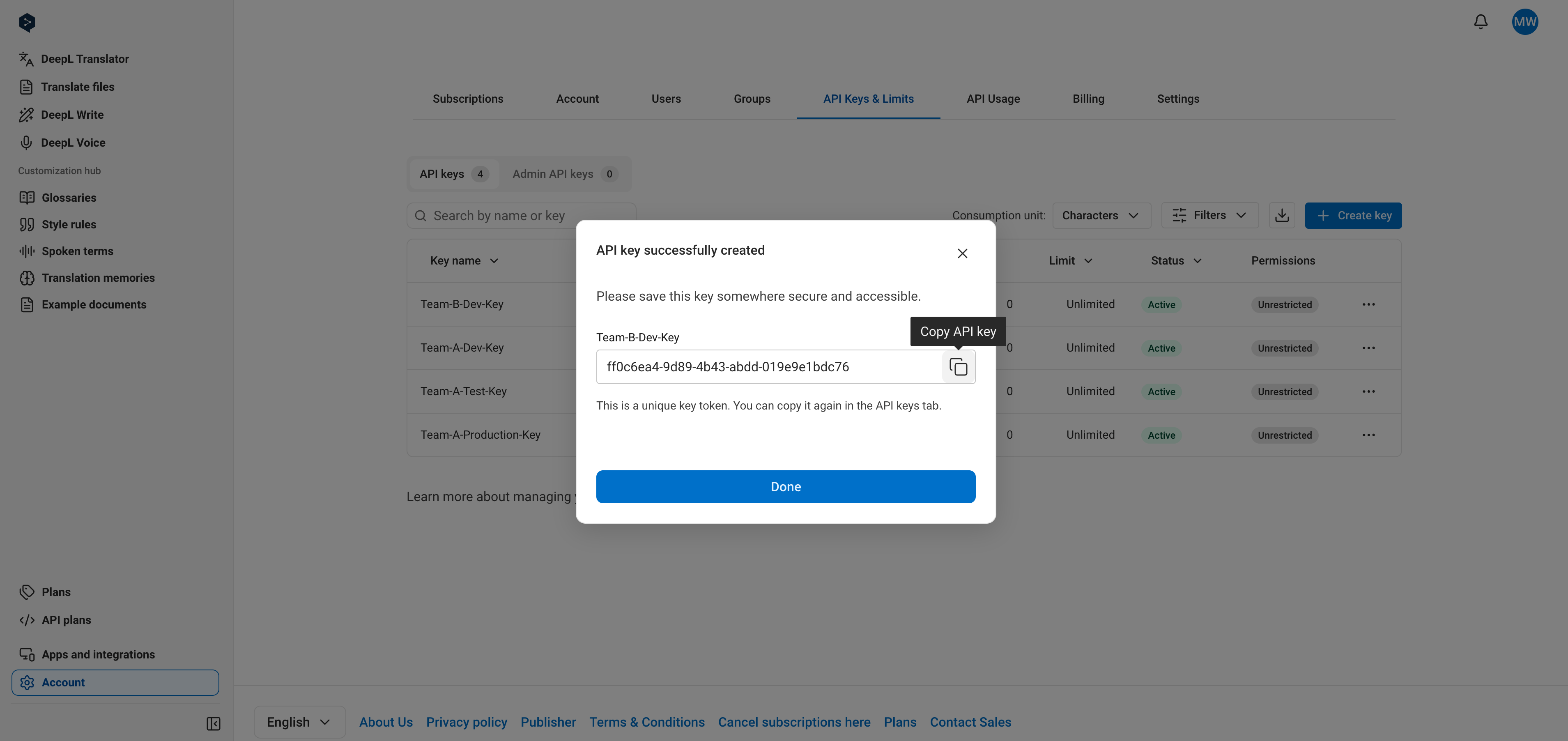
Copy an API key immediately after creating it
Copy a key
Click the “Copy” icon next to the key. For security reasons, the full key is never shown in the key table. Both active and deactivated keys can be copied.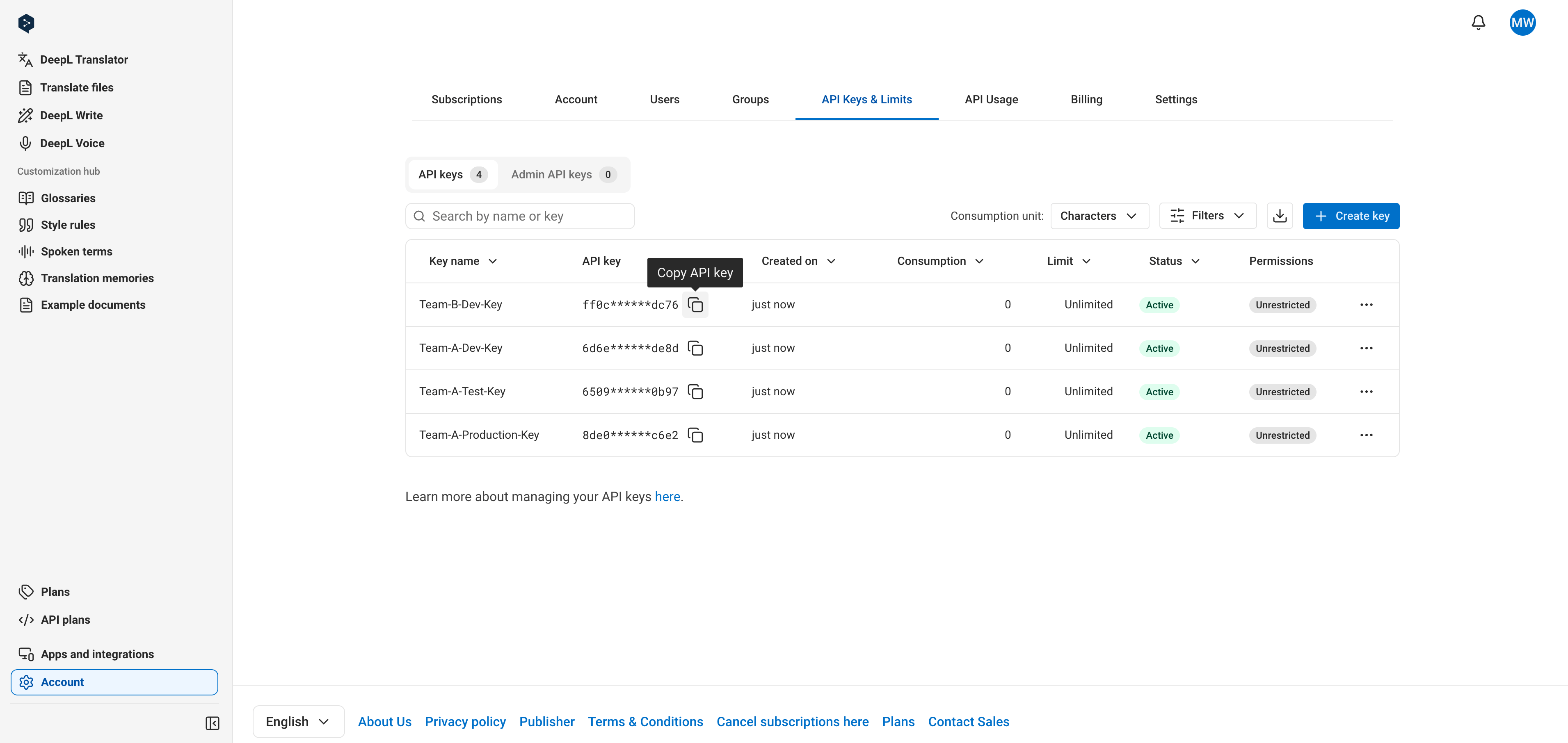
Copy an API key
Rename a key
Select “Rename key” from the key’s options menu. Both active and deactivated keys can be renamed, and two keys can share the same name.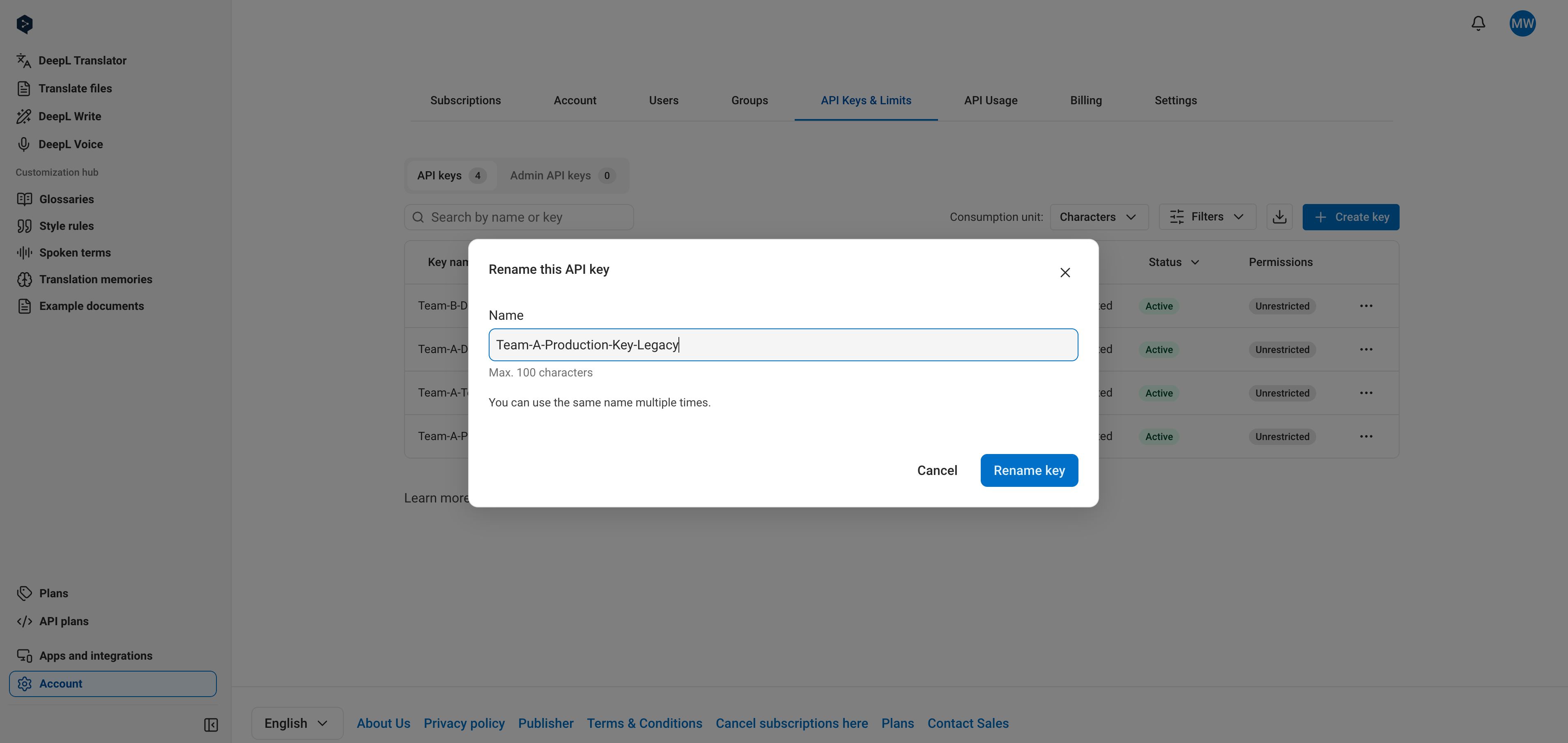
Renaming a key
Deactivate a key
Select “Deactivate key” from the key’s options menu, then confirm.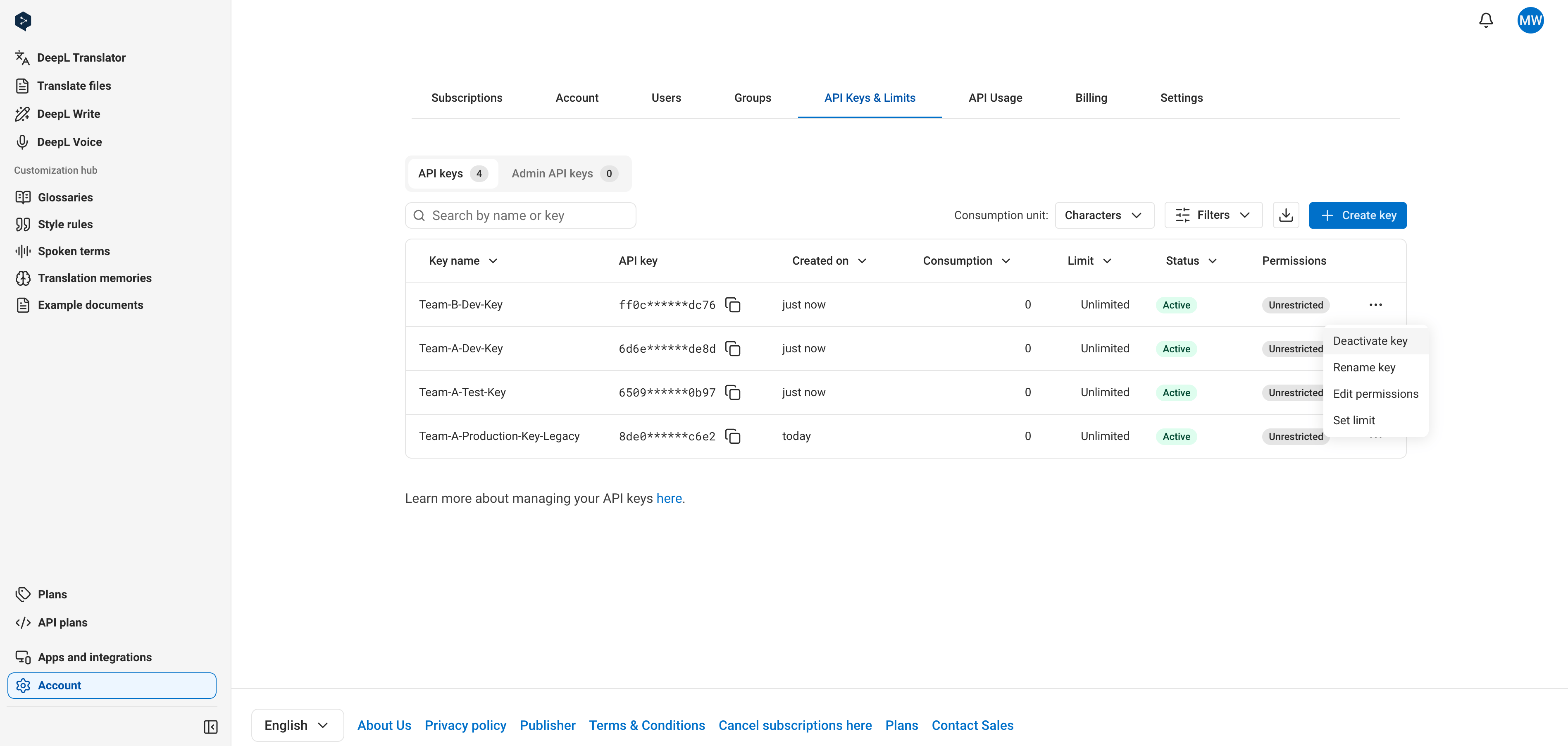
Select "Deactivate key" from key options
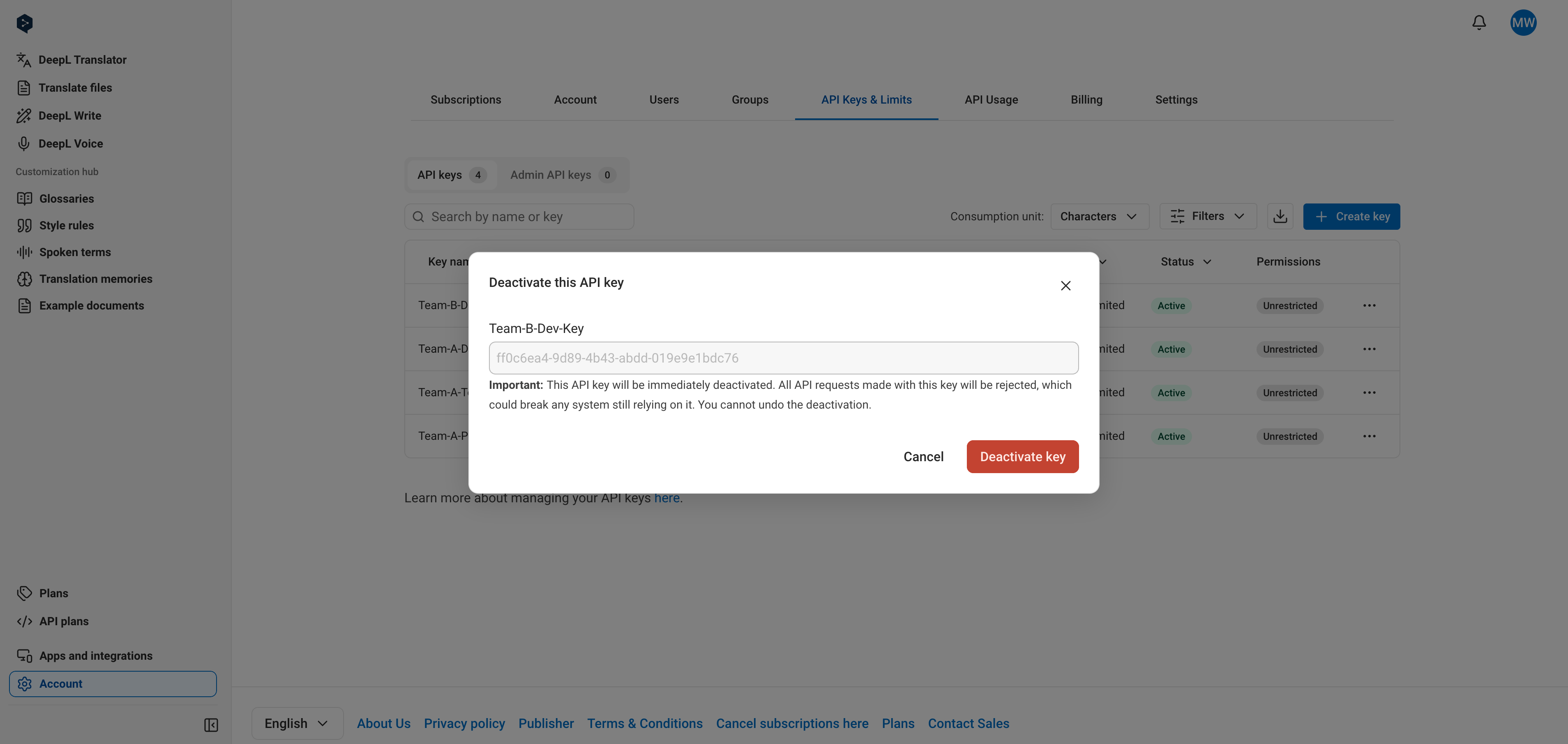
Confirm deactivation of key
Set a key-level usage limit
Key-level limits cap how much a key can consume in a one-month usage period. You can set a limit in characters (across text translation, document translation, and text improvement), STT minutes, or STS minutes. For example, a key with a 1,000,000 character limit stops consuming at 1,000,000 characters and starts fresh when the next usage period begins. You can see your current usage period dates in the API Usage tab. To set a limit, select “Set limit” from the key’s options menu, activate the limit, choose the unit (characters, STT minutes, or STS minutes), and enter an amount. Setting the limit to 0 prevents the key from consuming any of that unit.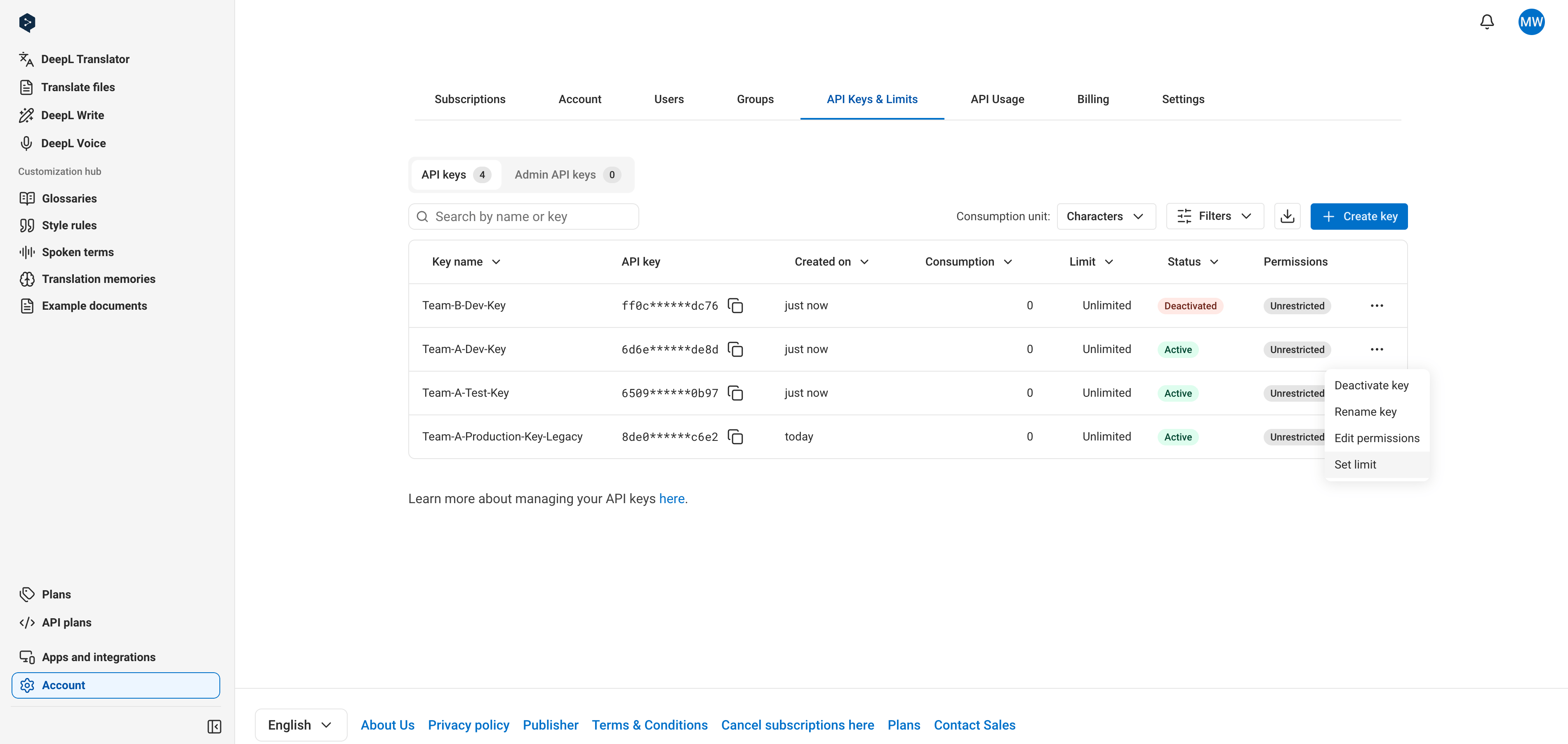
Select "Set limit" from key options
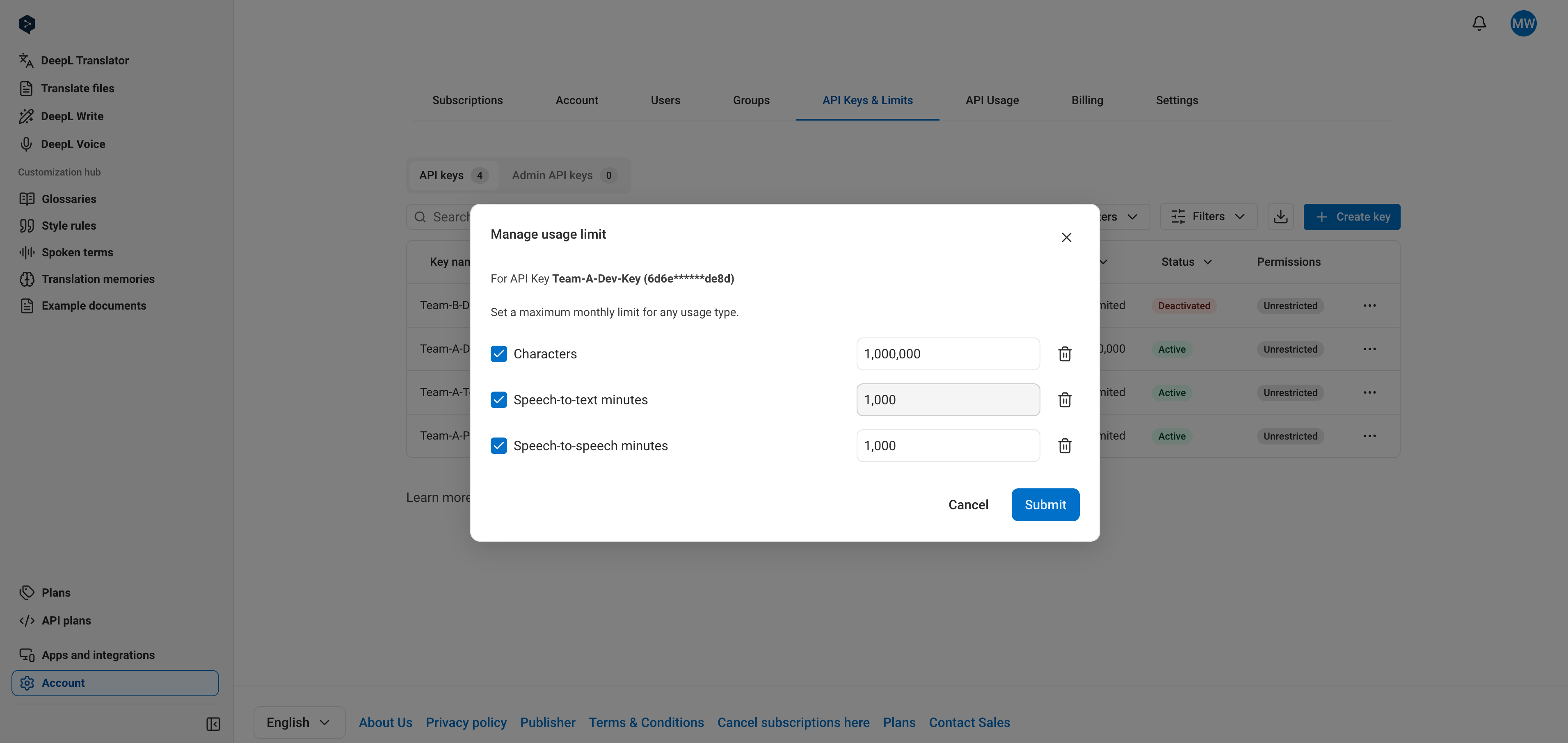
Activate and specify a limit
- You receive notification emails when a key reaches 80% and 100% of its limit
- The API responds with
456 Quota exceedederrors once 100% of the limit is reached
Set key permissions
Permissions restrict a developer key to specific endpoints. This section covers the UI steps; to understand how permissions are enforced, see Understanding API Key Permissions, and for what each scope covers, see Permission Scopes. To create a scoped key, click “Create key”, select Custom permissions, choose one or more scopes from the list, and confirm.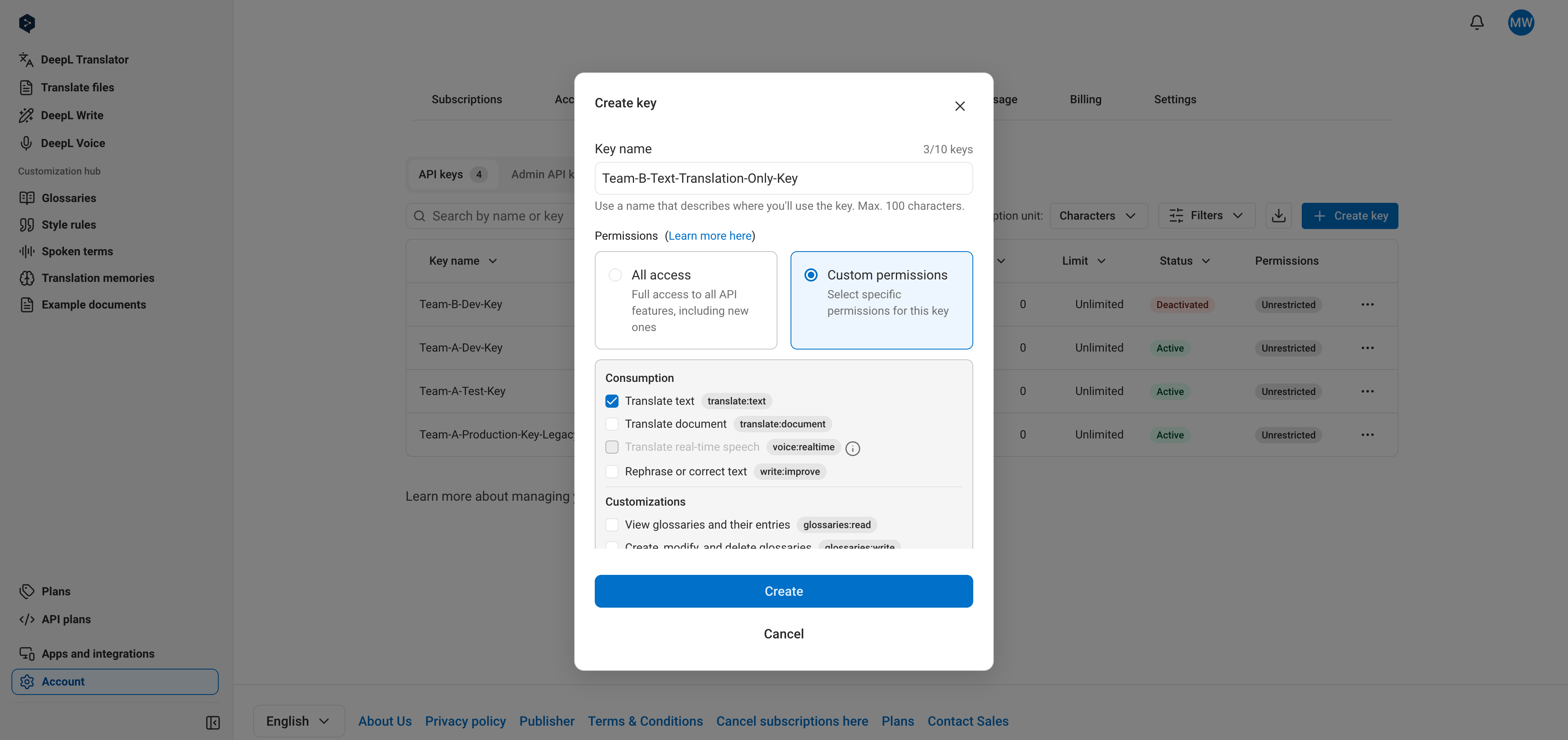
Creating a scoped API key
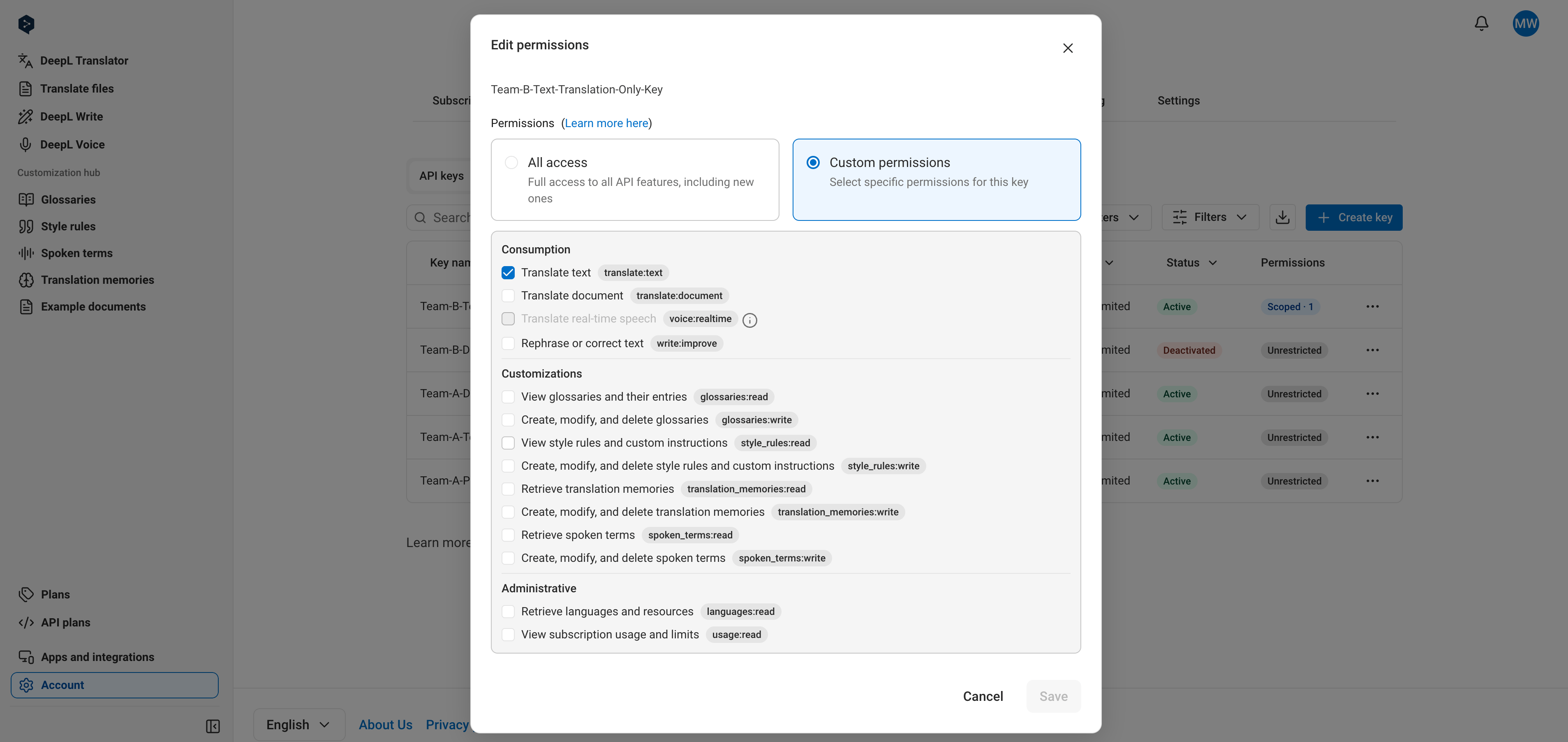
Choose all access or custom permissions
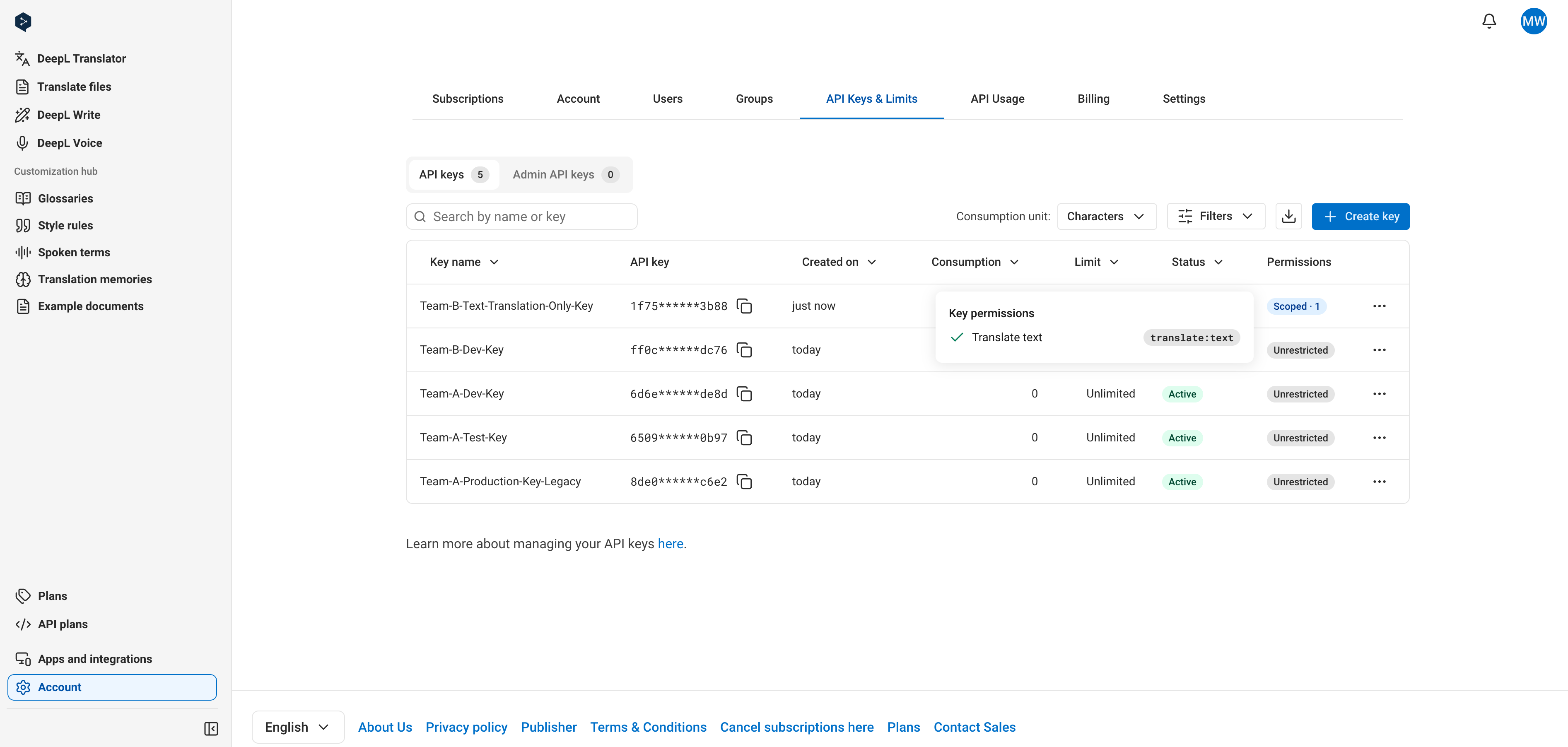
Hover a badge to view assigned scopes
Manage admin API keys
On the API Pro, API Growth, and API Enterprise plans, you manage admin keys on the “Admin API Keys” subtab of the “API Keys & Limits” tab.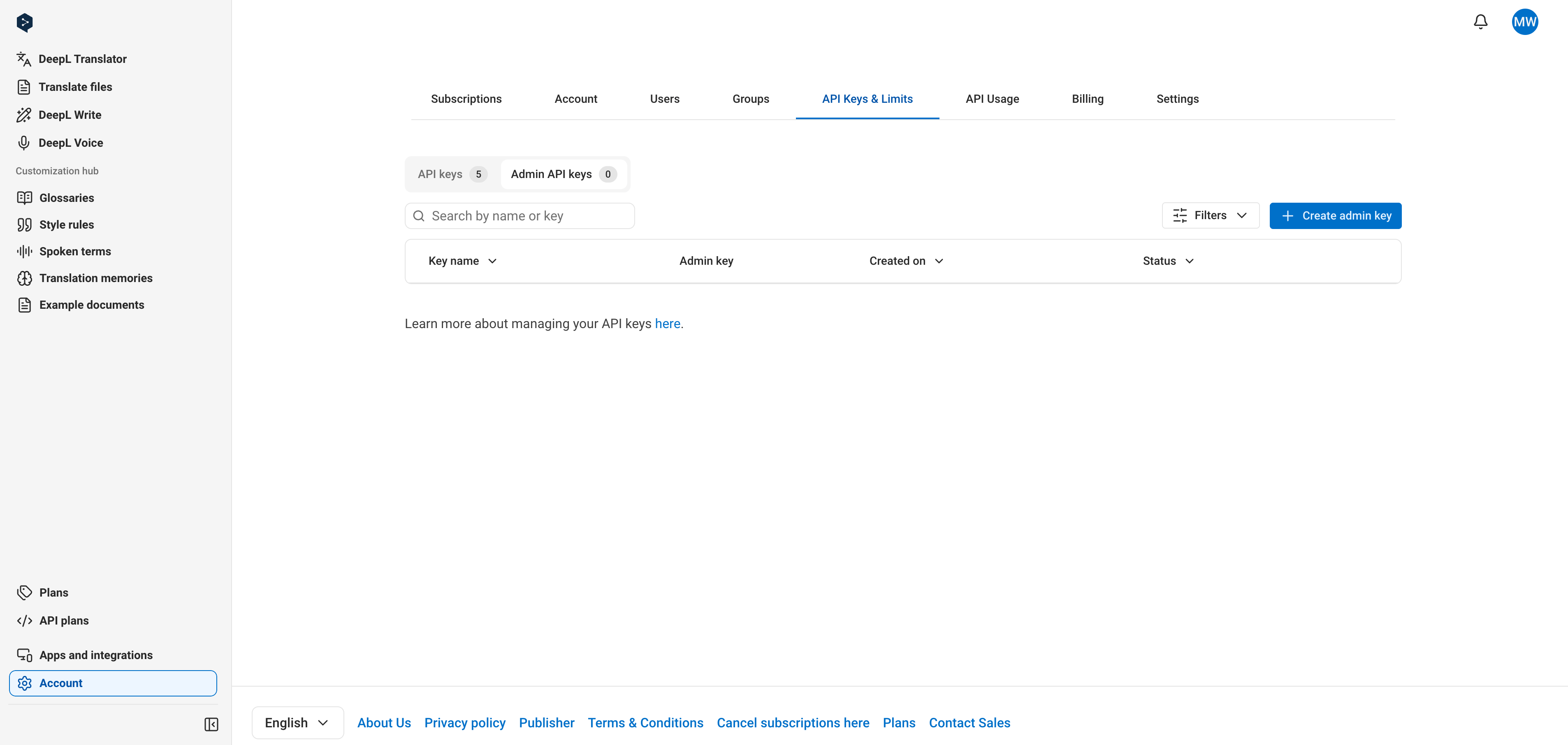
The Admin Keys subtab
- Admin keys always end with an
:admsuffix, which distinguishes them from developer keys - Unnamed admin keys are called “DeepL Admin Key” by default
- You can create up to 25 simultaneously active admin keys
- Usage limits and permissions don’t apply to admin keys